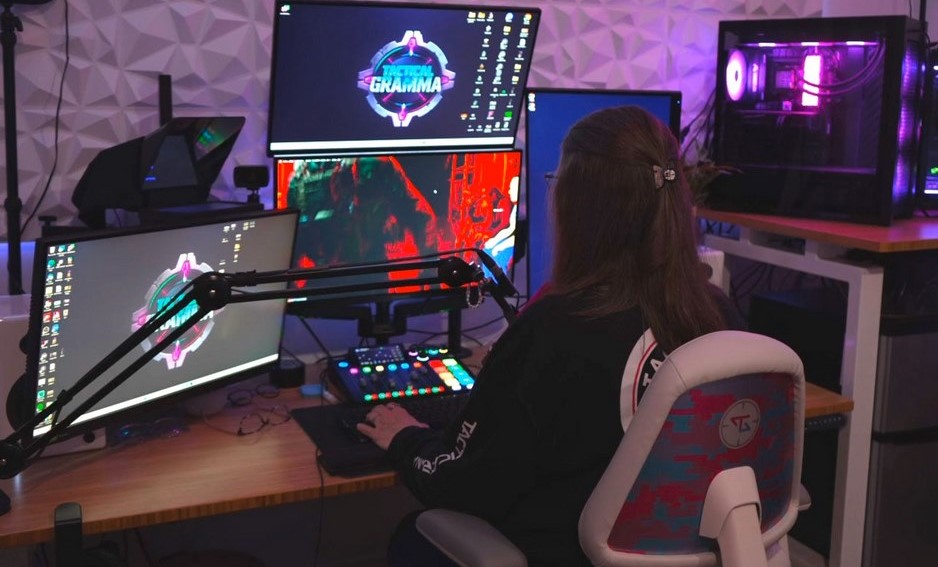
 Michelle ‘Tactical Gamma’ Statham in her gaming chair – credit, Michelle Statham Michelle ‘Tactical Gamma’ Statham in her gaming chair – credit, Michelle StathamKids these days, right? They spend too much time playing video games and not enough time outside. Tell that to grandmother Michelle Statham, and you’d expect her to agree with you. But in reality, her response would probably be something like “Which game?” From behind a techno-nest of screens in her home in Washington state, the 60-year-old is known to many of her friends as ‘TacticalGramma,’ the moniker she uses whilst playing her favorite video game: Call of Duty. Marketed to young men primarily, Statham doesn’t let that get in her way, and says she enjoys “sniping” the virtual soldiers controlled by those young men from long range. “That’s pretty fun,” she remarks, free of concern over judgement. And she has every reason to be, with over 110,000 followers on a livestreaming platform used by gamers called Twitch, TacticalGramma is a source of wonder and smiles, and she’s even used her video gaming popularity to raise thousands for charity. When she logs off Call of Duty, she likes to hit the gym with her daughter to ensure she doesn’t go stiff from sitting in a chair for an hour or more. Statham is just one of an estimated 57 million Americans over the age of 50 who play video games. Although, when one considers that video gaming took off in earnest during the eighties, it adds up that many of those who played the original arcade Mario Bros. would still be playing Super Mario Odyssey all these years later. A predecessor to Super Mario Odyssey has been linked in studies with increases in grey matter in the hippocampus, a region of the brain responsible for learning and short-term memory. With a massive 3D world to explore, other games of a similar style, like Legend of Zelda: Breath of the Wild, are linked to similar physiological effects. Recent data from the Entertainment Software Association (ESA), shows that nearly half of Americans in their 60s and 70s play some form of PC, mobile, or console video game every week, as do 36% of people in their 80s. “People always say: ‘I love you, Gramps. Keep on doing what you’re doing’… things like that, that really tug at your heart,” says Will, a 72-year-old retired Naval veteran who games. Statham and Will, who decided to withhold his last name, both spoke to the Guardian about their habits. Will said seniors can and should keep up with technology, and he likes to game with simulators like Hunter: Call of the Wild. The Guardian also spoke with several medical researchers who specialize in analyzing the effects of gaming. In many cases, there are positive health outcomes associated with gaming, particularly from social interactions, memorization, required reaction speed, and cooperative activities. Regarding the negative outcomes, it seems a mixed bag; with a study linking Call of Duty to reductions, rather than increases, in grey matter, as one example. The lead author noted however that it didn’t look at older adults in particular, and probably the seniors who decide to buy, set up, learn, and achieve proficiency in the game are probably not at undue risk for neurological harm.Despite a cranial injury preventing him from sitting down comfortably for more than half an hour, Will maintains a chipper attitude about his hobby, saying “you’re never too old to respawn.” For 57 Million Seniors who are Video Gamers in the US, Aging Is Just Another Level to Beat
|
