
Roblox has been put on notice yet again over child safety concerns. What do parents need to know?Lisa M. Given, RMIT UniversityOnline gaming platform Roblox has given a court-enforceable undertaking to Australia’s online safety regulator to do more “to protect children from grooming, sexual exploitation and abuse”. The agreement comes after the eSafety commissioner discovered adults were still able to see child accounts on Roblox, as well as sending requests to connect. This followed almost two years of back-and-forth between the eSafety commissioner and the game company over whether Roblox complies with industry standards for child safety. Roblox has committed to implement robust measures, including:
How did we get here?While Roblox (like other gaming platforms) is exempt from Australia’s social media age restrictions, it must still comply with the Online Safety Act. In late 2025, the company committed to making several changes to enhance child safety, including age-assurance checks for all users to access chat features. However, by February 2026 the company was put on notice by eSafety over concerns about child grooming. Additional design changes followed, with Roblox creating new “kids accounts” and enhancing parental controls. Today’s announcement by eSafety marks the second notice of concern in only a six-month period. Why is it so hard to make Roblox safe for kids?In April, I wrote about the steps Roblox was taking to significantly alter its design for children under 16. The new design included two new age-based account types, for children aged 5–8 and 9–15. The accounts included new features, including having the chat function set to “off” by default in Australia. There were also controls for parents to manage chat and block access to specific games for children under 13. Of course, these features rely on parental involvement, including decisions on the age at which the chat feature should be turned on. Yet eSafety’s announcement shows parents also need to be aware of potential risks in general discussion forums (outside of in-game chats), and in how adult users can view children’s profiles. Roblox’s safety features also rely on successful age checks, which have proven difficult to implement under Australia’s social media age restrictions. An eSafety report released in July found more than 50% of children said social media platforms had not asked them to confirm their age, and 18% said platforms incorrectly estimated their age as 16 or older. Why is change so slow?A key challenge in pursuing compliance with safety legislation is the significant amount of time needed to resolve concerns. In Roblox’s case, the company was put on notice about safety concerns in February, with new features announced in April for release in May or June. Now, in August, eSafety has issued a second notice, giving Roblox three months to comply. It may be 2027 before we know whether these next steps meet eSafety’s expectations. This echoes the long timelines for assessing compliance with Australia’s social media age restrictions. While the legislation passed in December 2024, it only came into effect 12 months later, in December 2025. Initial concerns were raised in March 2026, while eSafety released a three-month assessment showing only “limited” success of the ban in late July. While the potential penalties for non-compliance have been increased, it remains unclear whether – or when – technology companies will be fined. However, findings of non-compliance and issuing of fines may not be the end of the story. Technology companies may challenge the findings in the courts. Reddit launched a legal challenge to the social media legislation itself. And Meta (parent company of Facebook and Instagram) is facing a US court this week over concerns it breached federal and state privacy laws for children. Is the eSafety commission doing its job?The eSafety commission provides a critical service for implementation of the Online Safety Act in Australia. By being proactive in identifying gaps in platforms’ compliance, and in pursuing enforceable next steps, the commission plays a vital role in managing online safety. The commission also publishes helpful information guides and provides other advice to help parents and caregivers keep kids safe. What do parents need to know?The Roblox saga is a reminder that parents can’t leave children’s online safety to platforms. If your children are playing video games – especially online ones – you need to examine their content to assess whether they are age-appropriate. And parents must also familiarise themselves with the details of how platforms work, including parental controls. One place to look for resources is your local public library. The City of Melbourne Library, for example, has a guide with links to resources for children and parents of various ages, including for online gaming. A key message for parents is that they must remain vigilant in monitoring their children’s use of games and other online platforms. Many games have features that enable players to engage in forums and chats, which can open the door to predators. Where platforms attract a significant number of children – such as Roblox – predators will look for ways to find and engage with children. Parents should monitor chat engagement and ensure children are not being asked to engage via other channels such as email or messaging. Lisa M. Given, Professor of Information Sciences & Director, Social Change Enabling Impact Platform, RMIT University This article is republished from The Conversation under a Creative Commons license. Read the original article. |

Here's how parents can help children out of gaming addiction (2026-09-22T12:41:00+05:30)
 China limits online gaming to 3 hours a week for underage children.(photo:pixabay.com) New Delhi, June 17 (IANS) Are you one of those parents finding it hard to pull your kid out of their gaming addiction? Instead of directly restricting them from playing, making open and healthy conversations can help you better, according to behavioural health experts. Excessive gaming can take a toll on children's mental and physical health, which in turn can become more stressful for parents. While setting limits is important, children must be made aware of both the health benefits of video games as well as its damages. "Simply telling the child to not play games at all is not the solution because there are certain games that also help in developing problem solving skills and creativity. Parents need to communicate honestly and build a trust with their child to know what game they are playing," Harneet Kaur Kohli, Consultant - Psychologist, Manipal Hospital, told IANS. "When parents show a very disapproving reaction to gaming, children begin to hide it, resist it, and start to perceive that my parents see this wrong but I want to do it. While you allow them to play, engage with your child in healthy conversations about what the game is about and what they enjoy about it," added Mimansa Singh Tanwar, Clinical Psychologist, Department of Mental Health and Behavioural Sciences at Fortis Healthcare. A study of nearly 2,000 children, published in JAMA Network Open, showed that children who played video games performed better on cognitive skills tests involving impulse control and working memory compared to those who had never played. Studies have also shown video games to positively affect the brain and help people with cognitive disabilities like autism. A recent review of 116 scientific studies, published in Frontiers in Human Neuroscience, indicated that playing video games not only changes how our brains perform but also their structure. The studies showed that video game players display improvements in several types of attention, and require less activation to stay focused on demanding tasks. However, in gaming addicts, it caused functional and structural alterations in the neural reward system -- a group of structures associated with feeling pleasure, learning, and motivation. "If parents find some content which may be quite aggressive, violent or showing inappropriate behaviour or language, take an educative approach where you talk about how research has been showing that what we engage in with media can have an influence on our behaviour and it is true for all of us. So let's think critically about this," Tanwar told IANS. Kohli suggested that parents must have an open communication with kids and they should have a knowledge about what games should be given to their child based on their age. "Once communication is established, it is easy for parents to control the screen time and activity of their child. If a child is spending their entire day on mobile phones, parents have to involve them in other activities (physical activities)," she added. The doctor said that parents can also encourage children to have a physical sport and other stimulating activities based on their interests so they learn to balance between screen time and hobbies. Moreover, Tanwar said kids sometimes use gaming as a means of coping from stress. "Be watchful of signs if your child's preoccupation with gaming is increasing with inability to reduce their time despite multiple attempts and it is beginning to impact their emotional, social and academic functioning, seek help from a mental health professional," she added. The doctors also emphasised the role of schools as children spend at least 7-8 hours of their entire day at school."Schools must implement some educational programmes to inform children and parents about the pros and cons of mobile phones and gaming. They must involve children in these programmes in the form of physical activity so that they understand better. Informing them about the good uses will encourage them to use phones in a limited manner," Kohli told IANS. Here's how parents can help children out of gaming addiction | MorungExpress | morungexpress.com |
For 57 Million Seniors who are Video Gamers in the US, Aging Is Just Another Level to Beat (2026-09-15T10:30:00+05:30)
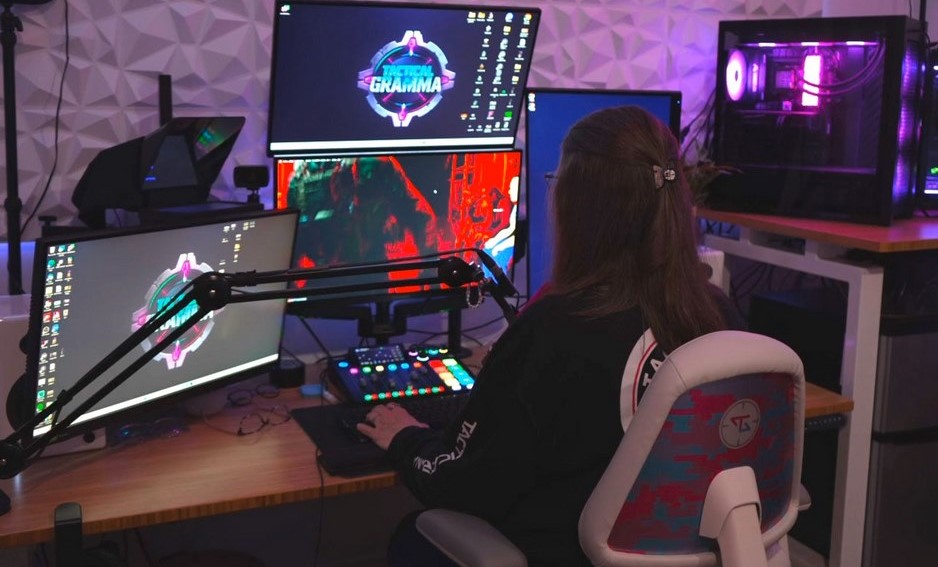 Michelle ‘Tactical Gamma’ Statham in her gaming chair – credit, Michelle Statham Michelle ‘Tactical Gamma’ Statham in her gaming chair – credit, Michelle StathamKids these days, right? They spend too much time playing video games and not enough time outside. Tell that to grandmother Michelle Statham, and you’d expect her to agree with you. But in reality, her response would probably be something like “Which game?” From behind a techno-nest of screens in her home in Washington state, the 60-year-old is known to many of her friends as ‘TacticalGramma,’ the moniker she uses whilst playing her favorite video game: Call of Duty. Marketed to young men primarily, Statham doesn’t let that get in her way, and says she enjoys “sniping” the virtual soldiers controlled by those young men from long range. “That’s pretty fun,” she remarks, free of concern over judgement. And she has every reason to be, with over 110,000 followers on a livestreaming platform used by gamers called Twitch, TacticalGramma is a source of wonder and smiles, and she’s even used her video gaming popularity to raise thousands for charity. When she logs off Call of Duty, she likes to hit the gym with her daughter to ensure she doesn’t go stiff from sitting in a chair for an hour or more. Statham is just one of an estimated 57 million Americans over the age of 50 who play video games. Although, when one considers that video gaming took off in earnest during the eighties, it adds up that many of those who played the original arcade Mario Bros. would still be playing Super Mario Odyssey all these years later. A predecessor to Super Mario Odyssey has been linked in studies with increases in grey matter in the hippocampus, a region of the brain responsible for learning and short-term memory. With a massive 3D world to explore, other games of a similar style, like Legend of Zelda: Breath of the Wild, are linked to similar physiological effects. Recent data from the Entertainment Software Association (ESA), shows that nearly half of Americans in their 60s and 70s play some form of PC, mobile, or console video game every week, as do 36% of people in their 80s. “People always say: ‘I love you, Gramps. Keep on doing what you’re doing’… things like that, that really tug at your heart,” says Will, a 72-year-old retired Naval veteran who games. Statham and Will, who decided to withhold his last name, both spoke to the Guardian about their habits. Will said seniors can and should keep up with technology, and he likes to game with simulators like Hunter: Call of the Wild. The Guardian also spoke with several medical researchers who specialize in analyzing the effects of gaming. In many cases, there are positive health outcomes associated with gaming, particularly from social interactions, memorization, required reaction speed, and cooperative activities. Regarding the negative outcomes, it seems a mixed bag; with a study linking Call of Duty to reductions, rather than increases, in grey matter, as one example. The lead author noted however that it didn’t look at older adults in particular, and probably the seniors who decide to buy, set up, learn, and achieve proficiency in the game are probably not at undue risk for neurological harm.Despite a cranial injury preventing him from sitting down comfortably for more than half an hour, Will maintains a chipper attitude about his hobby, saying “you’re never too old to respawn.” For 57 Million Seniors who are Video Gamers in the US, Aging Is Just Another Level to Beat
|
How dual-chipset technology is redefining mobile gaming and content viewing in India (2026-09-04T11:22:00+05:30)
 (Photo: realme) IANS New Delhi, (IANS) Mobile gaming has evolved from a casual pastime into a demanding form of entertainment, with smartphones now expected to deliver experiences once associated with dedicated gaming phones. According to a report by Mordor Intelligence, India's gaming market is projected to grow from roughly $5 billion in 2026 to $9.89 billion by 2031, at a 14.52 per cent CAGR, with mobile alone commanding close to 80 per cent of that market, making the smartphone, not the console or PC, the country's primary gaming phone. Higher refresh rates, richer graphics, faster touch response and increasingly complex game environments have raised the performance bar, making the modern gaming phone 5G category increasingly focused on frame stability, latency, thermals and battery endurance. Sustaining high frame rates over extended sessions requires a balance of processing power, thermal management, display responsiveness and intelligent resource allocation, rather than peak benchmark numbers alone. AI is emerging as a key part of this evolution, extending beyond photography, productivity and personalisation into gaming, where dedicated AI processing can generate intermediate frames for smoother motion, reconstruct visual details without demanding higher native rendering, and dynamically optimise visuals based on what's happening on screen. This mirrors how Indian buyers are already shopping: according to the Flipkart x Counterpoint Smartphone Insights Report 2026, 89 per cent of Indian smartphone buyers now say AI features influence their purchase decision, a shift from AI being a nice-to-have to a core expectation. It marks a broader shift in smartphone gaming, where specialised intelligence is increasingly being used to make hardware work more efficiently rather than simply adding more raw power. This is particularly relevant in a gaming environment, where even small fluctuations in frame rate or response time can affect the experience. For competitive players, consistency can be just as important as achieving the highest possible peak frame rate. The smartphone industry is therefore moving towards a more holistic definition of gaming performance, one that considers the interaction between the processor, graphics processing, display, cooling system, battery and software intelligence. The combination of specialised AI processing, a high-refresh-rate display, cooling and a large battery reflects how the definition of the best gaming phone around the Rs 30,000 price segment is evolving beyond processor performance alone. This shift is also changing how brands approach gaming smartphones, particularly in the budget phone segment around Rs 30,000. Instead of relying only on a more powerful application processor, manufacturers are exploring specialised hardware and AI-led optimisation to manage different parts of the gaming experience. The realme P4 series has helped bring this dual-chip architecture to a more accessible segment, adding dedicated processing capabilities alongside the primary processor. By distributing workloads more intelligently, the main chipset can focus on core computing while the additional chip handles supported visual and AI tasks. The realme P4s 5G brings this approach to life with a dual-chip architecture combining the MediaTek Dimensity 7400 Ultra with the dedicated Hyper Vision+ AI Chip. While the Dimensity 7400 Ultra handles core computing, the AI chip focuses on visual processing, enabling smoother graphics, higher frame rates and richer HDR visuals. The benefits of this architecture extend beyond gaming, with the Hyper Vision+ AI Chip also designed to enhance the overall content-viewing experience. It can help improve motion, clarity and dynamic range, making fast-moving content such as sports and action sequences smoother, while helping videos appear sharper and more vibrant. The setup is paired with a 144Hz Samsung 1.5K AMOLED display and up to 3000Hz instantaneous touch sampling for a more responsive gaming experience. Its AI capabilities include AI Hyper Motion for smoother and more stable frame rates, AI Hyper Clarity for sharper visuals and AI Always-On HDR for enhanced brightness and contrast. All these features combined make the realme P4s 5G one of the best smartphones around 30K segment. The experience is further supported by the AI Gaming Partner, which brings together GT Mode, Cleanup Acceleration, Do Not Disturb and network optimisation to intelligently manage performance, background resources and distractions during gameplay. This makes the dual-chip architecture relevant across multiple use cases; from maintaining smoother frame rates during extended gaming sessions to improving visual quality while watching movies, streaming content or following fast-paced sports. The realme P4s 5G also features a 7000 mm² AirFlow VC Cooling System to help maintain stable performance during extended sessions, alongside an 8000mAh Titan Battery with 80W fast charging and All-Scenario Bypass Charging, positioning it among the more capable 8000 mah battery phone options for users who prioritise endurance. Ultimately, the evolution of mobile gaming suggests that the next generation of gaming smartphones will not be defined by one specification alone. A high-performance processor remains important, but so are the display, touch responsiveness, battery, cooling and the intelligence that connects all of these components. As these technologies become more integrated, their benefits are also extending beyond gaming, shaping how users consume video, watch sports and interact with visual content on their smartphones. What matters increasingly is how effectively they work together to deliver a consistent experience over time. The realme P4s 5G, set to launch on 26 August, brings together a dual-chip architecture, 144Hz Samsung 1.5K AMOLED display and AI-led gaming capabilities to offer a more integrated approach to mobile gaming. Its Hyper Vision+ AI Chip works alongside the MediaTek Dimensity 7400 Ultra to enhance visuals and frame performance, while the AI Gaming Partner helps optimise system resources and the overall gaming experience. Together, these technologies position the realme P4s 5G as one of the best display smartphones around Rs 30,000 price category, where specialised AI processing is not limited to gaming, but also contributes to a smoother and more engaging content-viewing experience.As mobile gaming evolves, the focus is increasingly shifting beyond raw processing power towards how effectively different hardware and software components work together. This shift points towards a future where specialised AI processing and intelligent optimisation become increasingly central to delivering a smoother, more consistent gaming experience. How dual-chipset technology is redefining mobile gaming and content viewing in India | MorungExpress | morungexpress.com
|
Video games seen becoming a new frontier in digital rights (2026-08-27T13:19:00+05:30)
 Gaming computers await players of Boderlands 3 by 2K at E3, the annual video games expo experience the latest in gaming software and hardware in Los Angeles, California, U.S., June 12, 2019. (Reuters Photo) Avi Asher-Schapiro Thomson Reuters Foundation Critical digital rights battles over privacy, free speech and anonymity are increasingly being fought in video games, a growing market that is becoming a "new political arena," experts and insiders said on Thursday. With the industry set to more than double annual revenues to $300 billion by 2025, questions about how video game operators, designers and governments handle sensitive issues take on added urgency, said participants at RightsCon, a virtual digital rights conference. In recent months, a Hong Kong activist staged a protest against Beijing's rule inside a popular social simulator game called Animal Crossing, and a member of the U.S. Congress, Alexandria Ocasio-Cortez, campaigned in the game as well. The game Minecraft, meanwhile, has been used to circumvent censorship, with groups using it to create digital libraries and smuggle banned texts into repressive countries. "Video games have become this new political arena," said Micaela Mantegna, founder of GeekyLegal, an Argentinian group that focuses on tech policy. Also, game designers have been tackling sensitive topics by creating games that involve issues such as refugees or mental illness. "Video games are a powerful way to start talking about topics that are hard to engage in real life," said Stephanie Zucarelli, a board member of Women in Games Argentina, a non-profit group. User rights can be at risk, however, of being violated, said Kurt Opsah, an attorney with the Electronic Frontier Foundation, a digital rights group. Law enforcement can ask game companies their users' personal data, operating companies can censor game users and governments can pressure game operators and makers to remove content, he said. He cited an example of the U.S. military deleting critical comments that had been posted on recruitment channels it hosted on Twitch, a popular streaming platform. "They didn't want people to have an anti-military view on their recruiting channel," he said. Governments can apply pressure on video game companies, he said, such as the case of Activision Blizzard Entertainment that last year suspended a player from a video game competition for making political comments about Hong Kong in an interview.Blizzard is partly owned by Chinese gaming giant Tencent Holdings. Video games seen becoming a new frontier in digital rights | MorungExpress | morungexpress.com
|
The rise of ‘gaming’ in Nagaland (2026-08-27T13:18:00+05:30)
 Gaming enthusiasts in Junction 11 at Jail colony, Kohima. (Courtesy: Yangertemjen) Imlisanen Jamir, “Whether we like it or not, video games have become an integral part of our lives”, says Sungjem Jamir, an engineering student and a serious gamer. Video games’ becoming a major part of the cultural discourse is not something new. In contrast to Euro American countries, this particular facet of ‘modern culture’ was quiet late to reach this particular part of the world. “The early 2000’s would be my best bet as to when video games (with the advent of computer games) started to command a large following in Nagaland”, states Along Pongen, the owner of an internet café and a gamer himself. A specific estimate regarding the effect of virtual gaming communities in Nagaland is difficult to come up with, since there has been no attempt to study this phenomenon. However, judging by the large number of young people in local gaming centers, it may be safe to assume that gaming has become a significant part of the young Naga. Along says that most of his customers are young boys from all levels of economic background. He adds that a lot of them spend an average of 7-8 hours every day on gaming. A majority of the gaming centers in Dimapur and Kohima reported an average of 7 hours of gaming that most of their customers indulge in. The Morung express asked a group of gamers about the effects that ‘gaming marathons’ have on their health. A majority of them cited feelings of being tired and exhausted. A couple of them cited headaches and problems of eyesight, however none of them came out saying that it affected their urge to continue with the same exercise all over again. Studies show that too much of video games lead to social isolation, ADD, depression, psychological disorders etc. A quick survey of the different studies also shows incidents of violent behavior in children. Chris Watters, the creative director for gamespot.com, in a mail to the Morung Express conceded that certain side effects of gaming marathons are a matter of concern for the gaming community. However, he pointed out that “that there has been no conclusive study on the negative effects on gaming that can be accepted as complete proof.” Watters stated that efforts have been made by the website (which is one of the most popular gaming sites in the world) to create awareness for “responsible gaming.” On being informed of the gaming craze among a considerable amount of the Naga youth, he noted that “it is difficult for a society new to the gaming culture to moderate its actions.” He added, “I understand that gaming is relatively new in your state, hence, responsible gaming would require quiet sometime. The gaming community needs to mature to understand the various implications of video games; both positive and negative.” His statements turn out be quiet relevant while talking to a number of gamers in the state. Most of them have very little or nothing to say against video games. A majority of them seem to suggest that gaming is a social event as well as “an escape from the real world.” Lipokzulu, the owner of Junction 11, a gaming Lounge in Jail Colony, Kohima reiterates this point by stating that the “the idea behind the opening of his gaming parlor is primarily to give gaming enthusiasts a chance to come together” and “relax.” Sunjgem Jamir, the administrator of an online gaming group and a serious gamer himself however suggests that obsessive gaming can lead to adverse effects on a person. He adds, “When I say this, I am telling you with experience, that video games can be very destructive.” He states that young Nagas studying outside the state spend a large amount of time on games thereby neglecting their studies. These feelings are also reiterated by many parents who express concern over the obsessive gaming habits of their children.A definitive conclusion is hard to make regarding the effect that gaming has on this relative new community in the state. A large majority of young gamers seem to take it as a creative virtual platform that does little if no harm at all. One might question the severity of this concern in the face of more pressing social and political issues in the state. However, concerns voiced out in other parts of the world suggest that serous note needs to be taken on the implication of this cultural phenomenon. More so because the implications would be on a society that is only of late engaging with technology and has yet to feel its effect. The rise of ‘gaming’ in Nagaland | MorungExpress | morungexpress.com
|
Are video games art or products? This tension lies at the heart of Australia’s gaming industry (2026-08-17T13:13:00+05:30)
Zainab Darbas, Monash UniversityIn 2004, a largely anonymous team of Australian video game developers released a prototype video game titled Escape from Woomera. In this 3D adventure, the player takes on the role of Mustafa, an Iranian refugee fleeing violent repression who is being held in a virtual re-creation of the (now-shut) Woomera Immigration Reception and Processing Centre. Mustafa is facing deportation back to Iran – which will mean almost certain death. He and the player must escape.  A screenshot from the unfinished point-and-click adventure game Escape from Woomera. Wikimedia, CC BY A screenshot from the unfinished point-and-click adventure game Escape from Woomera. Wikimedia, CC BYEscape from Woomera was one of the first Australian video games ever to receive government funding to support its development. In 2003, the creators received a A$25,000 grant from the national arts body, the Australia Council for the Arts (now Creative Australia). The game itself, and the fact it was awarded public funding, were highly controversial. They sparked conversations about what kind of art the government should fund, and why. Should the goal be to nurture new artistic talent? Or to preserve Australian-made content? Or build profitable industries?  A photo of the entrance of the Woomera Immigration Reception and Processing Centre. The photo was taken in April 2003, the same month the centre was closed. Wikimedia, CC BY A photo of the entrance of the Woomera Immigration Reception and Processing Centre. The photo was taken in April 2003, the same month the centre was closed. Wikimedia, CC BYMore than two decades on, Australia has a robust ecosystem of video game development supported by grant programs across the country. My research looked at the scope and structure of these programs and examined how they affect game developers. My findings reveal that the structures of funding programs emphasise generating profit and growing the video game industry. This is at odds with the approach taken by many game developers, who view themselves as artists, and their games as a cultural form. This fundamental mismatch is a source of tension for game developers who rely on public funding to support their work. Competing priorities of public fundingI read through more than 50 annual reports, strategic documents and other materials from Australian arts funding bodies to analyse funding policies for Australian video games. The documents emphasised the economic potential of the video game industry, frequently citing growth rates, expenditure figures and returns on investment as justification for continuing to fund game development. However, they also promoted Australian video games as complex, experimental and culturally valuable. This shows how funding agencies juggle competing priorities. While they value games with artistic merit that contribute to the cultural landscape, agencies must also demonstrate that their public funding programs generate financial returns. These agencies’ economic priorities heavily influence how public funding programs are structured – which can make them seem highly formal and business-like. Company or community?This formality creates difficulties for game developers, whose work practices are often artistic, informal and adaptive. I interviewed 11 game developers to understand their experiences with public funding. They generally held positive sentiment towards the funding available to them, describing it as a “lifeline”, “fantastic” and “awesome”. Several developers spoke highly of the range of funding programs available for projects of various scope. At the same time, they had criticisms. They found the application processes for public funding overly formal, forcing them to adapt their artistic practices to a rigid, business-like structure. As one interviewee explained:
Tensions were particularly acute around providing diversity information. Most funding applications ask applicants to submit information about diversity, equity and inclusion in a highly formalised format. The developers I spoke to felt “icky”, “gross”, “weird” and “uncomfortable” while completing these forms, describing them as “tokenising”, “dehumanising” and “impersonal”. As one interviewee said:
More than just productsThe interviewees recommended several changes funding agencies could make to improve their application processes. They could, for instance:
These changes would signal to game developers and the wider public that our public institutions value video games as more than just money-making products. Australian-made games such as Untitled Goose Game and Cult of the Lamb – which have achieved international critical success in recent years – wouldn’t exist without public funding. Yet many video game developers struggle to find options for secure public funding. And when it isn’t available, they are forced to take a chance on over-saturated crowdfunding platforms such as Kickstarter. It’s important that public funding programs work to support game developers on their own terms, so they can keep creating excellent games that enrich our cultural landscape. Zainab Darbas, PhD Candidate, School of Media, Film and Journalism, Monash University This article is republished from The Conversation under a Creative Commons license. Read the original article. |

Australian video‑game music is an exciting area of cultural activity – and you should be paying attention (2026-08-17T13:12:00+05:30)
Dan Golding, Swinburne University of Technology; Brendan Keogh, Queensland University of Technology, and Taylor Hardwick, Queensland University of TechnologyAn enthusiastic, sellout crowd arrived at Melbourne’s Hamer Hall in September to hear an evening of music from Orchestra Victoria. The program consisted largely of Australian music and premiere performances. If the sight of over 2,500 filled seats (filled, anecdotally, by those much younger than the typical orchestra audience) did not indicate how deeply this music was loved, then the standing ovation at the end of the night would leave no-one in doubt. This packed concert, however, wasn’t a performance of a symphonic great or even a major film soundtrack. It was an evening of music created for video games. Video games are now a cultural activity for the vast majority of Australians and a major platform through which audiences are introduced to new music. Audiences have personal, even intimate relationships with the music of video games, given the long hours spent playing in lounge rooms and studies around the nation. The potential of video-game music is particularly evident in Australia, where several independent video games have obtained both critical and commercial success around the world. This is, in part, thanks to their music, such as Cult of the Lamb (2022), Unpacking (2021) and Hollow Knight (2017). However, how the game developers actually work with musicians to produce these landmark works has so far been an unanswered question. Performing on the global stageOur new Music and Games 2023 Benchmark aims to establish the scope and scale of Australia’s game-music sector. Our research includes findings about working conditions, rights, royalties and more. It paints a picture of a sector confidently performing on the global stage alongside far bigger national industries. Game music work is overwhelmingly being undertaken in Australia as contract-based freelance work and rarely as full-time employment. Despite this, game developers see composers as fundamental creative partners. Game music workers feel they have meaningful input on the projects they work on. They rarely approach game soundtracks as “just another gig”. This is reinforced by our finding the vast majority of game music workers in Australia create original music for game projects, rather than implementing pre-existing works. Australian game composers are more likely than workers in other soundtrack sectors to retain rights and opportunities. In film and television, disadvantageous “buyout” contracts, where composers hand over all ownership of their music to studios, have become common. In the Australian game music sector, such arrangements exist in only 13% of projects. This allows most composers to retain ownership of their music and to tap into additional revenue streams like performance royalties. An astonishing 74% of music workers are able to release their game’s soundtrack personally and independently, rather than going through either the game’s studio, publisher or a music label. Different ways of workingThere is no “one way” of working for Australian game music workers, with a wide diversity of skills and experiences evident. Many composers work directly with game development tools or with audio “middleware” such as Fmod or Wwise on game projects. Tools like these allow composers to engage with the game’s production and implement their music directly into the game, rather than simply handing over audio files to game developers. Around half, however, prioritise music creation and leave implementation of that music up to the developers. This means technical knowledge of game development is not as integral to creating game music as many may assume. Creative communication skills are also important for musicians and highly valued by game developers who may otherwise find music to be a language they do not speak. Like the game development and music sectors more broadly, unpaid work remains common. Only 53% of game music workers report any income from this work. However, we found the median annual income for all game music workers is A$40,000, compared to only $30,576 for musicians generally. Among those who make more than the Australian minimum wage ($45,000) from game music, this jumps to a considerable median income of $82,500. Being at the intersection of games and music also means the gender and racial inequalities of the video game and screen composing sectors are entrenched within game music. Three-quarters of all game music workers identified themselves as male, and 72% as white, Caucasian or European. While Australia has diverse musicians, they currently have unequal ability to move into game music. This needs proactive solutions. Creative works in their own rightOur benchmarking report reveals an exciting and so far under-appreciated area of cultural activity in Australia. Australian game soundtracks are not sterile assets produced for a mass medium. They are genuine creative works that are adored in their own right by audiences around the world. However, growing the sector in Australia requires focused support. Its lack of diversity is a major area of concern. Even while game music workers are able to retain generous rights to their music, many are frustrated and confused by the lack of clear standards. We also heard several stories of workers being pressured to give up their rights once an international publisher decided to invest in a local game developer. As Australia’s game industry continues to grow, it will be important to watch how Australia’s musicians are brought along for the ride. Correction: this article originally misstated the capacity of Hamer Hall. This has been corrected. Dan Golding, Associate Professor, Swinburne University of Technology; Brendan Keogh, Senior Lecturer, Queensland University of Technology, and Taylor Hardwick, Research Assistant, Queensland University of Technology This article is republished from The Conversation under a Creative Commons license. Read the original article. |

Can a video game save a life? African refugee puts players in his race for survival (2026-07-28T12:03:00+05:30)
 Can a video game save a life? African refugee puts players in his race for survival: Video game developer Lual Mayen, 25, who learned to code in a refugee camp after fleeing South Sudan, plays his new game at his home in Washington, D.C., US on January 7, 2020. (REUTERS File Photo) WASHINGTON, (Reuters): The goal of Lual Mayen's video game is to survive the horrific ordeal of a refugee, an experience that his family knows well, but the 25-year-old developer's ambition is to change the world. Mayen, who was born as his family traveled 250 miles (400 km) to escape South Sudan's second civil war, hopes his game, Salaam, will give players a better understanding of what it means to be homeless, hungry and on the run. "A lot of people don't understand the journey of a refugee," said Mayen, 25, who and spent his first 22 years in a refugee camp in northern Uganda before moving to the United States. "It was a journey of life and death," he said, recalling family stories about bomb attacks, wild animals and how babies were abandoned by parents who could no longer care for them. Now head of his own video game company in Washington, Mayen believes that "gamification," where participants make decisions unlike the passive experience of watching a movie, puts ordinary people in the shoes of a refugee. Salaam, an Arabic greeting meaning peace, enables users who have never had to flee a war-torn country to take a virtual trek to a "peaceful environment" -- if they can dodge hostile troops and find enough food and water. BRIDGING THE VIRTUAL AND REAL WORLDS While the game is free to play, when participants need to buy food, water or medicine for their virtual characters, they can make in-app purchases that will go to real-life refugees, he said. "Salaam is going to be the first-ever game that is going to bridge the virtual world and the reality on the ground," he said. "When someone buys food in the game, you're actually buying someone in a refugee camp food." But Mayen also has a long game in mind, hoping that Salaam will enlighten today's teens when they become the next generation of policymakers. "When they're making policy, they'll already understand what refugees face, just through playing my game," he said. "That's actually how we change the world and how we can be able to use the industry for good." Growing up in a refugee camp, Mayen had never even seen a computer until one day, at age 12, he reported to the camp's registration center. "It was a moment that actually helped me to understand, wow, I want to use this one day," he said. For the next three years, his mother, whom he made the main character in Salaam, worked tirelessly to stash away $300 to buy him a laptop, which he now keeps in a glass display case in his apartment. His game went viral after he uploaded it to Facebook and caught the attention of the gaming industry. In 2018, he was named a Global Gaming Citizen at the Game Awards in Los Angeles. "To be able to ... represent the continent and represent the game for social impact, it gives me so much hope," he said. "It gives more refugees hope." Can a video game save a life? African refugee puts players in his race for survival | MorungExpress | morungexpress.com
|
Pleasure centre: how video games affect young brains (2026-07-22T12:20:00+05:30)
Murat Yücel, The University of MelbourneTeens who frequently play video games have larger reward centres in their brains than those who play less often, according to a study published today in the journal Translational Psychiatry. The researchers analysed MRI scans of more than 150 German teenagers and found frequent game players had a greater volume of left striatal grey matter than irregular gamers. Associate Professor Murat Yücel, Clinical Neuropsychologist at the Melbourne Neuropsychiatry Centre and the University of Melbourne’s Department of Psychiatry, explains how young brains respond to reward: The important thing to remember with the sample in this study is it’s a healthy group. There’s no pathology or illness, so the study doesn’t tell us about brain disorder. What it may be telling us is that there are individual differences in people’s brains that render them more or less likely to be heavy video game players. More broadly, adolescent behaviour is driven by reward, much more so than with adults. The study found that there’s a difference in the levels of activity in the brain’s ventral striatum – area of the brain that is very reactive to reward – between the heavy gamers and the light gamers. This isn’t just a video game-specific region of the brain. Some people might generate dopamine by playing video games. Others might get these rewards through eating, gambling, or engaging in social activities. Are the children with increased activity in the reward centre of their brain more likely to develop various addictions, or does it fluctuate as they move through adolescence? That’s the question we all want to answer. The kids in the study were around 14 years of age, which means changes would be occurring to the way their brain connections are made. These connections will set them up for the rest of their life, influencing the way they behave and may influence whether or not they develop disorders. Levels of dopamine, which is one of the main neurotransmitter drugs released by the brain, also changes in young brains and has a big influence on this wiring of the brain that occurs in adolescence. By playing rewarding computer games, these kids are influencing the connections their developing brains are making, through the production of dopamine. So they’re reinforcing certain networks in the brain that are very sensitive and reactive to reward. This is likely to influence their behaviour, temperament and personality. But whether that actually goes on to be a problem or a disorder, we don’t yet know. The brain is really amazingly plastic – much more plastic than we used to think – and it can change over time. If the behaviour of the kids in the study is locked into video gaming, and that’s all they do (if have very few other activities they find rewarding), that’s where a problem might start. But if they play sport, take music lessons, or are involved in other social activities and they play video games, it’s probably not going to be a major problem. Young people need diversity in their reward activities. How does this study fit into the existing body of research on the way adolescent brains respond to reward? We’ve been studying the same region of the brain as the authors of this study, in a group of kids aged 12 to 18 years. We have found this area of the brain changes a lot during this developmental period, particularly in terms of volume and particularly in boys. We think these volumetric changes in male brains relate to how much they engage in rewarding behaviours such as internet gaming, maybe gambling, and so on. So this study is in line with what we’re thinking. A lot of my research looks at drug addiction. We know anything that increases the dopamigenic activity – any drug or any behaviour that fires up the dopamine system – has the potential to be addictive. And the more you rev the dopamine system, which makes you feel euphoric, the more you dampen the whole system. So the next time you need more of the drug or experience to get the same high. In other words, you develop tolerance. So with the kids in the study, if they play video games continuously for long periods of time, they’re getting a dopamine release. The pleasure of gaming is really derived through the uncertainties that continuously occur. And over time, the brain might dampen this system down. Then they would need more of it to gain a similar level of pleasure, which is where the addiction might kick in. But again, that goes back to balance – if the kids are doing other things that are pleasurable, then their brain might not be so vulnerable. Did the kids in the video game study have these differences in the brain to begin with, or was this a result of the video gaming? That’s one of the problems with this study – it’s not longitudinal, so you don’t know if the brain differences were there already, and that’s what led to the video gaming, or if video gaming is leading to changes in the brain system. Our study is one of the few that follows these kids over the adolescent period. So we’re mapping the changes that are occurring. What’s next for your study? We’re going to be following these kids for as long as we can. They’re 18 at the moment so they’re at the age where this search for reward will kick in so they might play video games, try drugs and engage in risky behaviour to satisfy these desires. We’ll be measuring their activity and comparing it with their brains when they were 12 to 16 years of age to ask whether we could have predicted these behaviours early on from their pre-existing brain differences. We will also look to see how those behaviours changed the developmental trajectory of the brain in different ways. Hopefully, we’ll be able to answers the questions that this video game study has thrown up. Murat Yücel, Professor and Clinical Neuropsychologist, The University of Melbourne This article is republished from The Conversation under a Creative Commons license. Read the original article. |


